Table of Content
- How to Cut Your Own Hair at Home and Get Salon-Level Results
- Many people don’t see me on the Deep Roots at Home Facebook page these days due to censorship.
- #2: Wet Straight Hair, Dry Curly Hair
- Step 4: Start trimming the front section of your hair.
- #3: Separate Your Hair into Sections
- All Products
- What to do before you cut your own hair:
The ponytail should be located in the same place as a unicorn's horn. Make sure the right sections are even with the left sections. Thanks to all authors for creating a page that has been read 3,846,409 times. Make sure it isn't cocked to one side, since this could result in uneven layers.
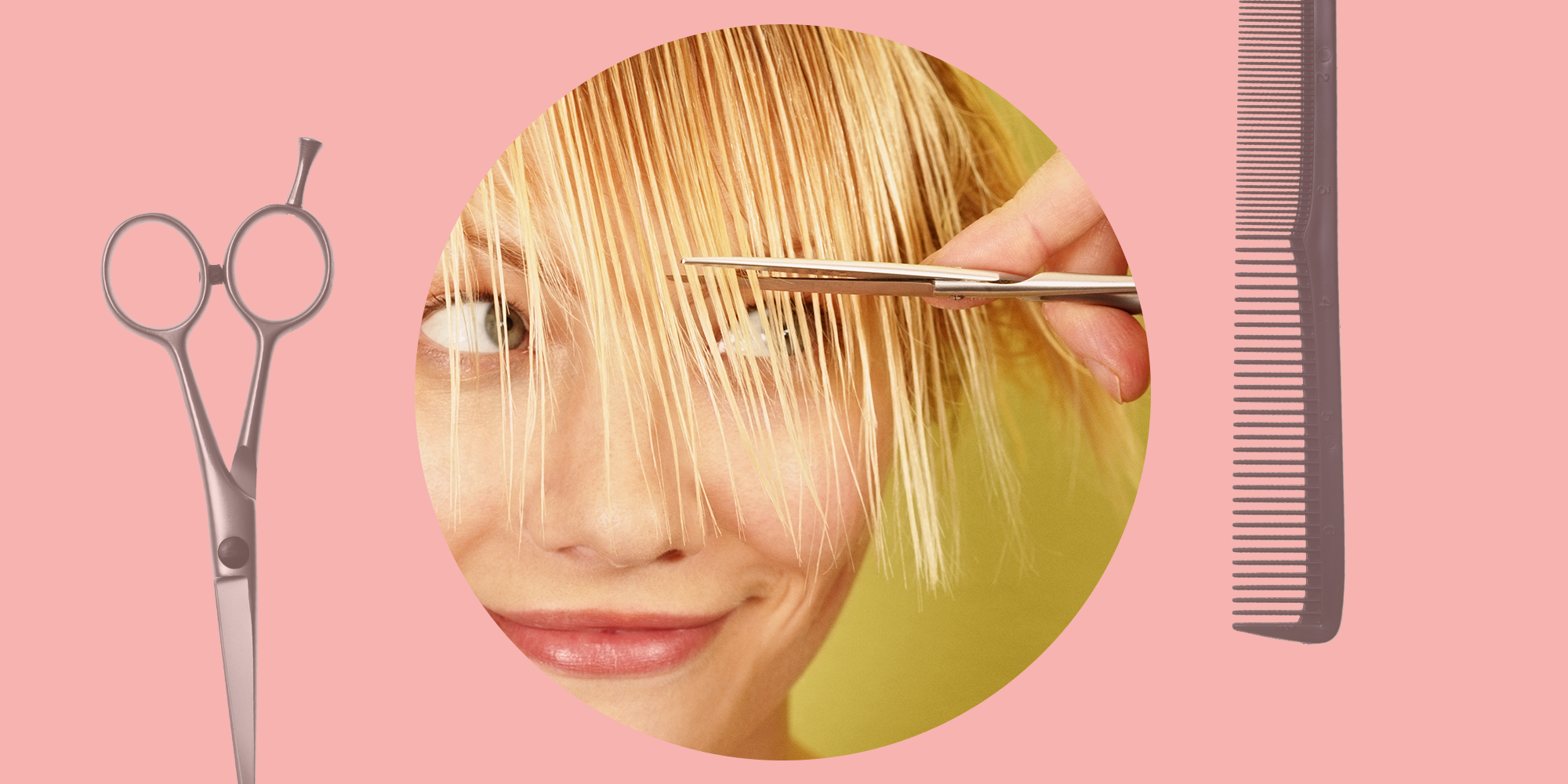
Comb out small sections with a fine-tooth comb, clamp it between two of your fingers, and then snip upwards with your scissors. You don’t need to cut into the hair very much, even a few millimeters will soften the edges. The overall shape of your hair should be fairly even and symmetrical. Use several small chops until you've trimmed all of the hair. Then, angle your scissors so they're nearly parallel to your hair, and cut a few times into your hair to thin the ends out slightly. Remove your hair ties or clips and visually assess your hair.
How to Cut Your Own Hair at Home and Get Salon-Level Results
Your fingers should be perpendicular to your forehead. It's better to layer short hair when it's evenly damp, so that you can cut the hair with greater precision. Keep in mind that this method will only work for pixie style cuts. Take a look at your hair and decide exactly where you want the layers to be and how short you want them before you begin.
Then, cut each individual curl as it hangs naturally. For afro-textured hair, keep your hair dry, with no products, and brush it out to its fullest. Now, trim damages and split ends of your hair without stretching any of it out with your fingers, a little like cutting a hedge.
Many people don’t see me on the Deep Roots at Home Facebook page these days due to censorship.
Remember, we're going for a perfectly imperfect look, but there should still be some obvious symmetry. You might find one side feels more challenging, so take your time. This is a moment to go back in and slide cut or point cut any uneven pieces. Use slide cutting to adjust your length and point cutting to adjust your overall shape. Gurgov says pinking shears, the special hair scissors with teeth, will help achieve a bangs look that isn't too blunt or harsh.

It is the part of your head just before it starts to curve down to the back of your head. Thanks to all authors for creating a page that has been read 107,549 times. Use your comb to draw an even horizontal line to separate the bottom section of hair. If the hair is parted on one side, the left or right side will have more hair than the other side, which is okay.
#2: Wet Straight Hair, Dry Curly Hair
For the record, pros recommend seeing a stylist for a layered haircut. But if you simply cannot be stopped, this easy-to-follow tutorial will help you add long layers at home. Pay special attention to YouTuber Pick Up Limes’s technique for point-cutting .

Layered haircuts help get rid of dry hair and split ends, give your hair a thicker and healthier look, and make you look years younger. Now that you've made a loose face framing shape, we're going to use point cutting to fine tune our layers. Beginning at your shortest length, slowly lift the hair up in small sections and make soft cuts directly into the hair. This will soften our lines and give us another chance to eliminate any frayed looking ends. It will also help us lighten things up wherever the hair appears to be a bit bulky.
Brush the hair forwards towards the forehead. Gather the hair into a ponytail at the base of the forehead. If you are cutting a client's hair, have them sit in a chair. Rinsing your hair with shampoo helps get rid of your hair and scalp’s greasiness. It’ll also make it easier for you to hold your hair securely while trimming the sections. Don’t forget to dry your hair with a towel before jumping into the action.
Throughout the haircut, you will use 1 stationary guide to measure against every segment of hair. This will produce shaggy layers at varying lengths throughout your hair. Section off a small segment of hair at the top of the head. Determine the length of the stationary guide—keep in mind that this will be your shortest layer.
Once you’ve cut your hair straight across, you may find that your hair looks a little heavy or blockish. One of the possible ways to lighten the look is to make a few vertical snips into your hair. Read on for valuable advice that will make your haircut a success. Then watch handpicked video tutorials that will teach you how to cut bangs, layer your hair, buzz cut your own hair, and even get a bob or a pixie cut at home. Depending on your type of hair, your trimming routine can totally vary. This video walks through the necessary steps for taking the ends off of natural hair.
A traveling guide moves with the area being cut.The most recently cut segment of hair in a section assumes the role of the traveling guide. It is held up to the next segment of hair and used as a ruler. Work in a well-lit place with access to a sink and a mirror - probably the bathroom. Have a towel ready to drape over your shoulders, a set of hair clips for holding back sections of your hair, your scissors, and a comb at your disposal. A second mirror you can use to check out the back of your hair is also necessary. You may also need a spray bottle filled with water to keep your hair damp, depending on how fast it dries.
Once you’ve cut it all, brush your hair out again and trim any stragglers that are sticking out over the edges. Repeat these steps until all of your hair is the same length. Yes, it looks ridiculous while you're doing it, but the results of this method are nice short layers.
Check out this video, which goes through the steps one by one. For a lot of hair types, a good cut can completely change the way your hair is shaped. This video shows how to perfectly shape your afro at home. Celebrity hairstylist Chris Appleton also provides a step-by-step demonstration on his Instagram, where he suggests that you should start at the front and work your way back. He starts by laying the clippers against the front of the ear near the temple and moves upward. Before you reach for the scissors (I'm not kidding – put them down), give this story a read.
Cutting Even Layers
We sourced all the best tricks for trimming your hair at home – ones that will keep you from giving yourself a cut you'll regret. Brushing your hair makes it more likely to break, which in turn makes it frizzier. If your hair needs to be detangled, wash and condition it, and while the conditioner is still in, run a wide tooth comb through your hair. This is helpful whether you have tight or loose curls. Continue lifting and cutting each section in the same way. Bring each section up and forward to the same imaginary point above your head before making the cut.


No comments:
Post a Comment